
Emergency
Unresponsive, not breathing
Or only gasping or gurgling
Gasping is not breathing. A few seconds of jerking at the start can be part of it too.
Call the emergency number and put it on speaker. The operator stays on the line and tells you what to do.
Push hard and fast on the middle of the chest.
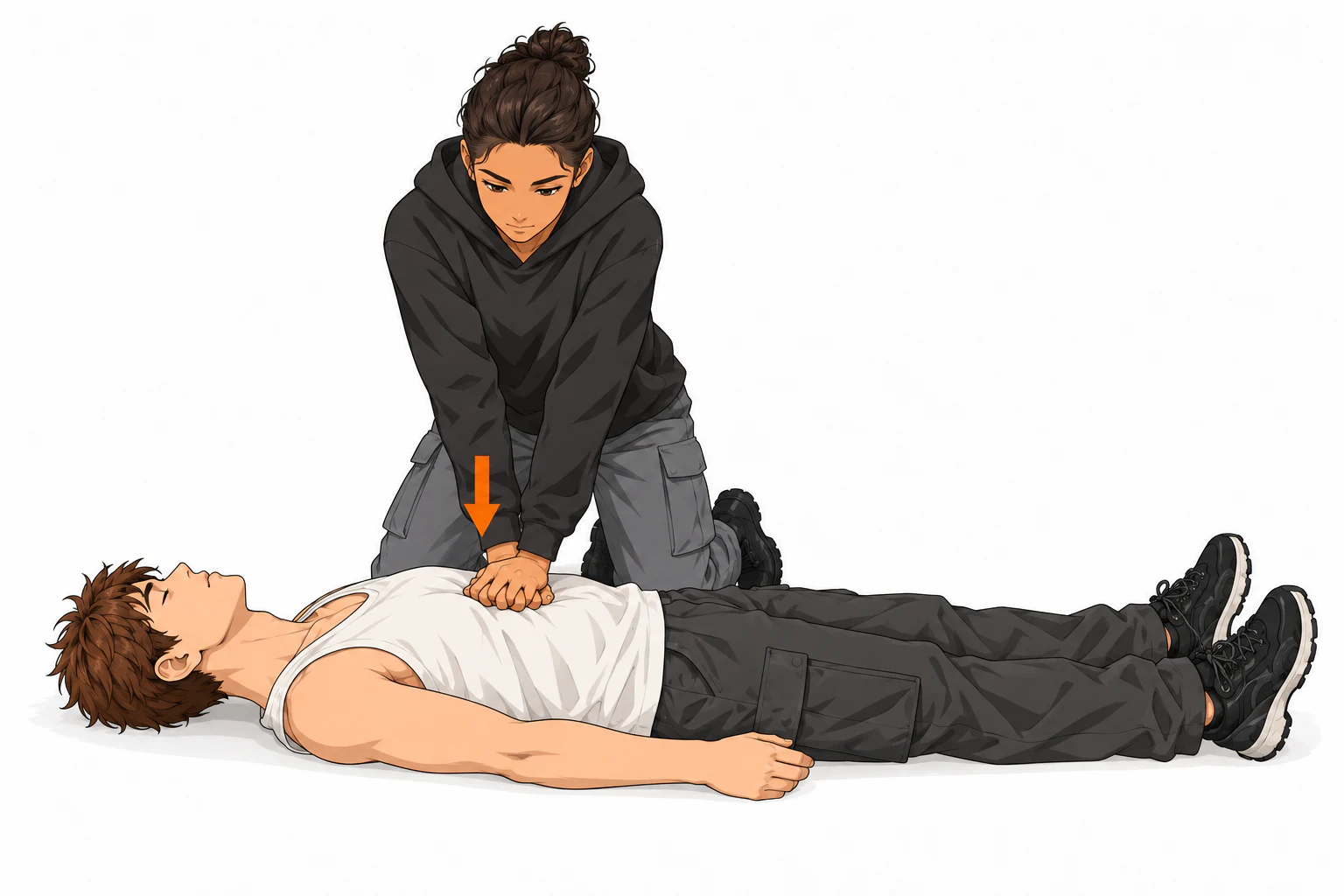
Arms straight, shoulders above your hands, 5 to 6 cm deep, 100 to 120 times a minute. If they are on a bed, start there and push harder.
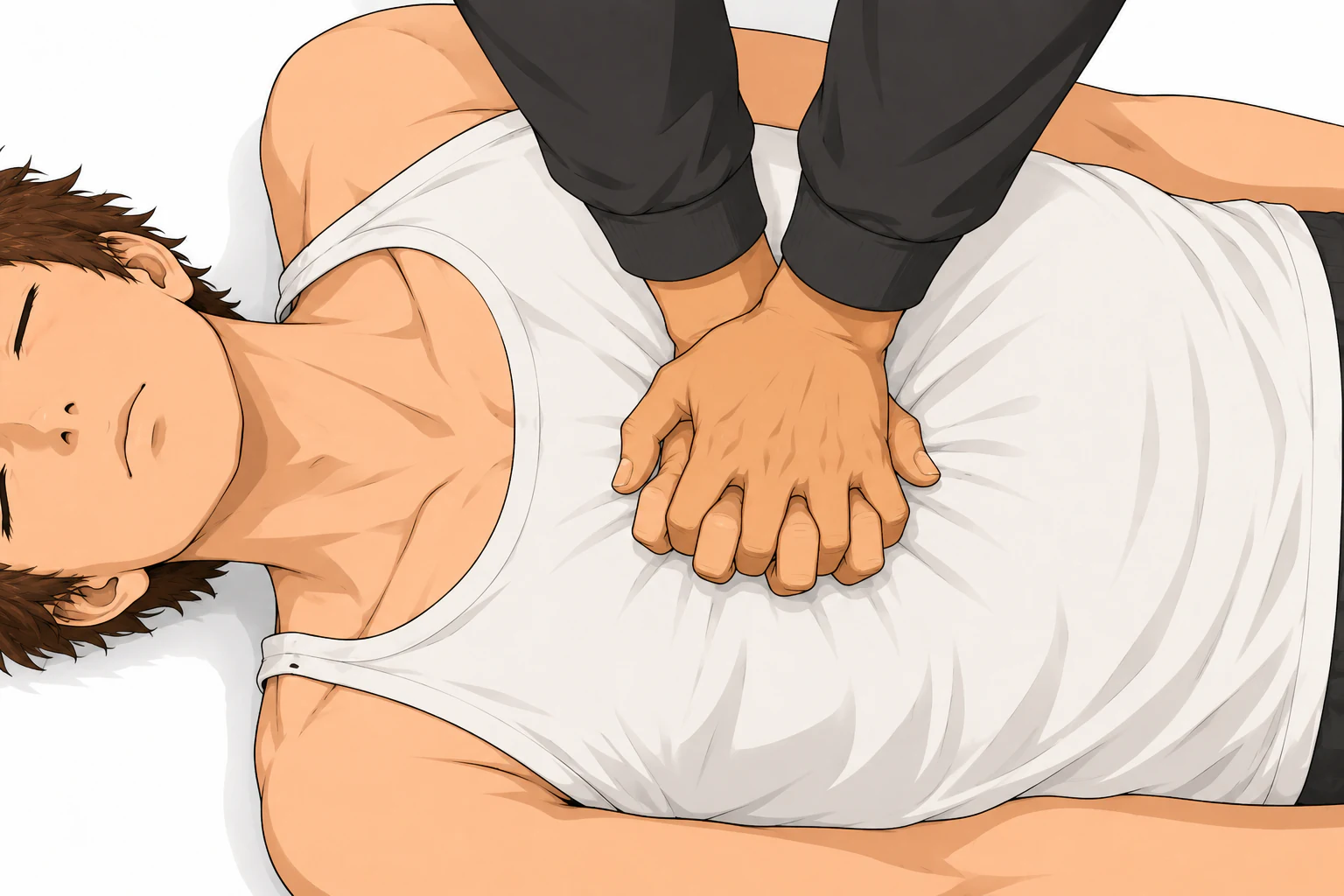
The heel of one hand on the middle of the chest, the other hand on top, fingers interlocked.
Don't stop until the ambulance crew takes over, or the person wakes, moves on purpose or breathes normally. If there are two of you, swap every 2 minutes.
Have someone fetch a defibrillator (AED) if there is one nearby. Switch it on and do what it says. Anyone may use one, without training.
Give breaths only if you have learned how: 30 pushes, then 2 breaths. After opioids or other downers, breaths help especially.
Don't
- Don't stop to feel for a pulse.
- Don't hesitate: pushing on someone's chest does far less harm than waiting.
Why it happens
High doses of opioids, GHB or alcohol can stop someone breathing, and without oxygen the heart stops.
On the phone and when help arrives
On the phone, describing what you see is enough. We advise against mentioning drugs.
On the phone, say what was taken if you know. In most circumstances they won't tell the police.
When help arrives, tell them what was taken, medicines included, and how much, and hand over anything left. It helps the treatment.
Doctors' confidentiality covers drugs too.
Emergency
- Unresponsive, breathingWon't wake up, but breathes normally
- Opioid overdoseWon't wake, slow breathing, tiny pupils
- SeizureGoes stiff, jerks violently, doesn't respond
- Heat strokeVery hot, and confused or not responding
- Serotonin syndromeVery hot, shaking, twitching, confused
- ShockPale, cold sweat, racing heart, dizzy
- Bad tripPanic, fear, losing track of where they are
- PsychosisSuspicion, feeling followed, hallucinations