
Emergency
Unresponsive, breathing
Won't wake up, but breathes normally
Call the emergency number and put it on speaker.
Check their breathing:
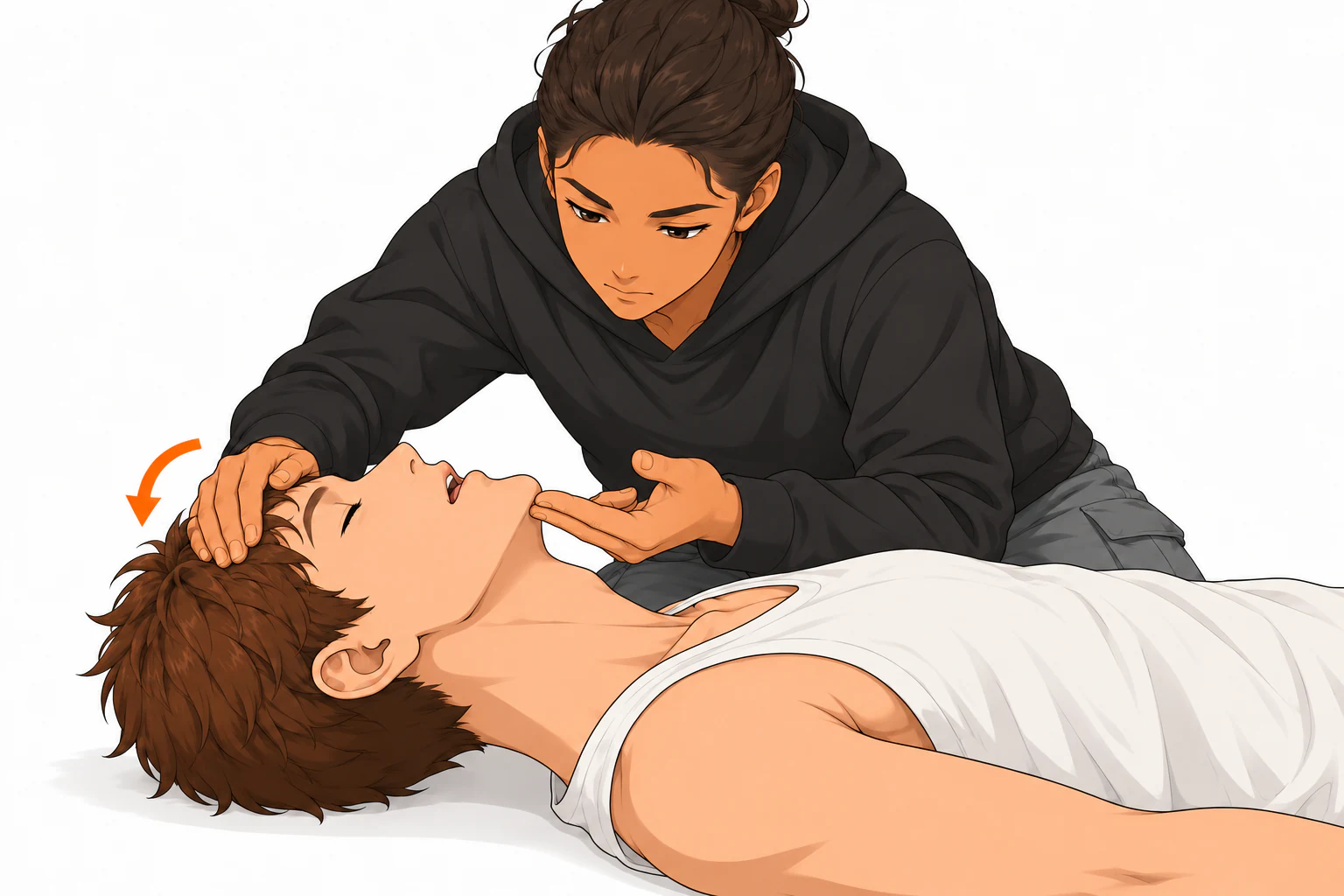
Tilt the head back and lift the chin: one hand on the forehead, two fingertips under the tip of the chin.
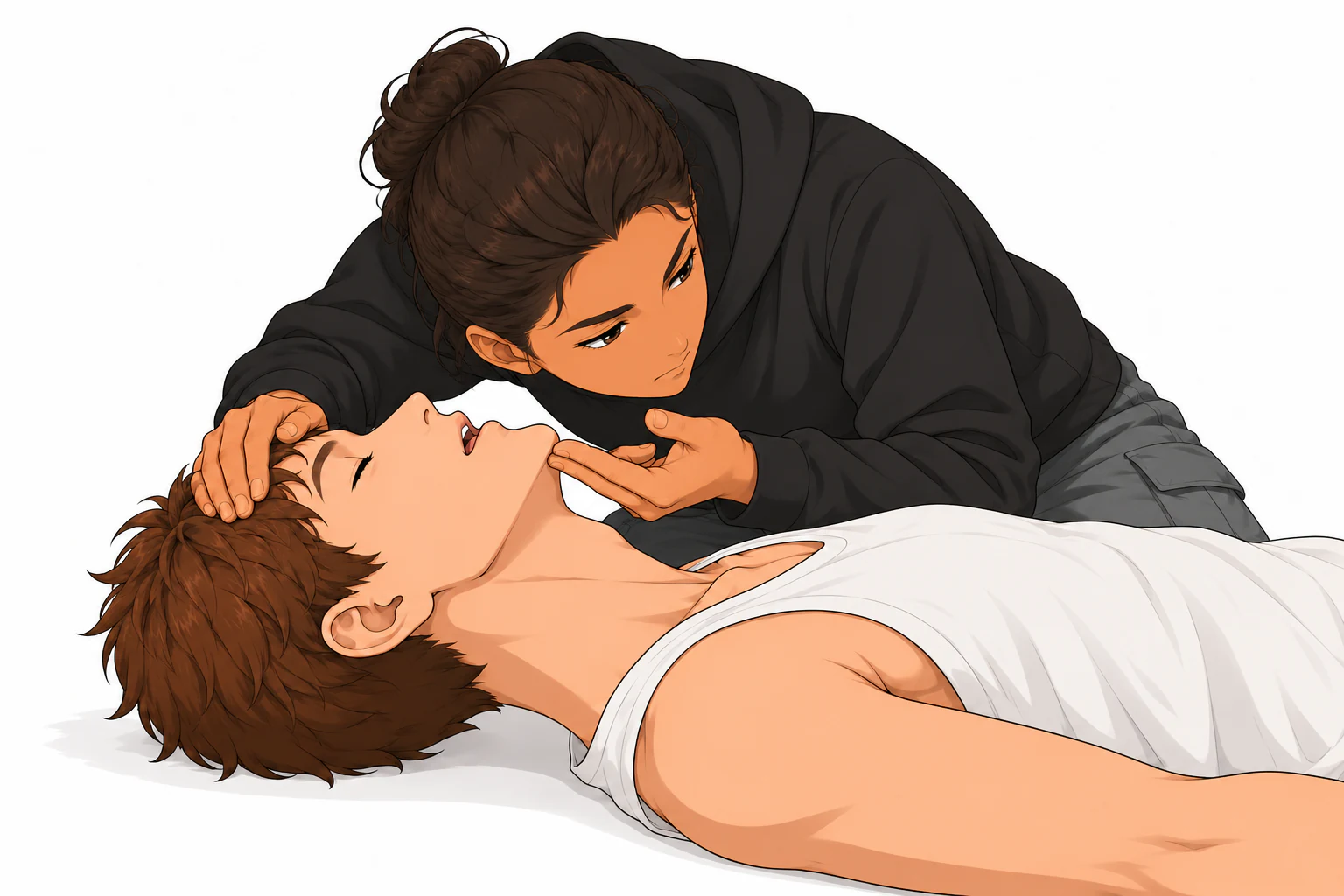
Then look, listen and feel for up to 10 seconds: your cheek above their mouth, your eyes on their chest. If they are not breathing normally, only gasping, or you are not sure, go to Unresponsive, not breathing.
Turn them onto their side, into the recovery position, unless they may have been hurt in a fall: then leave them on their back.
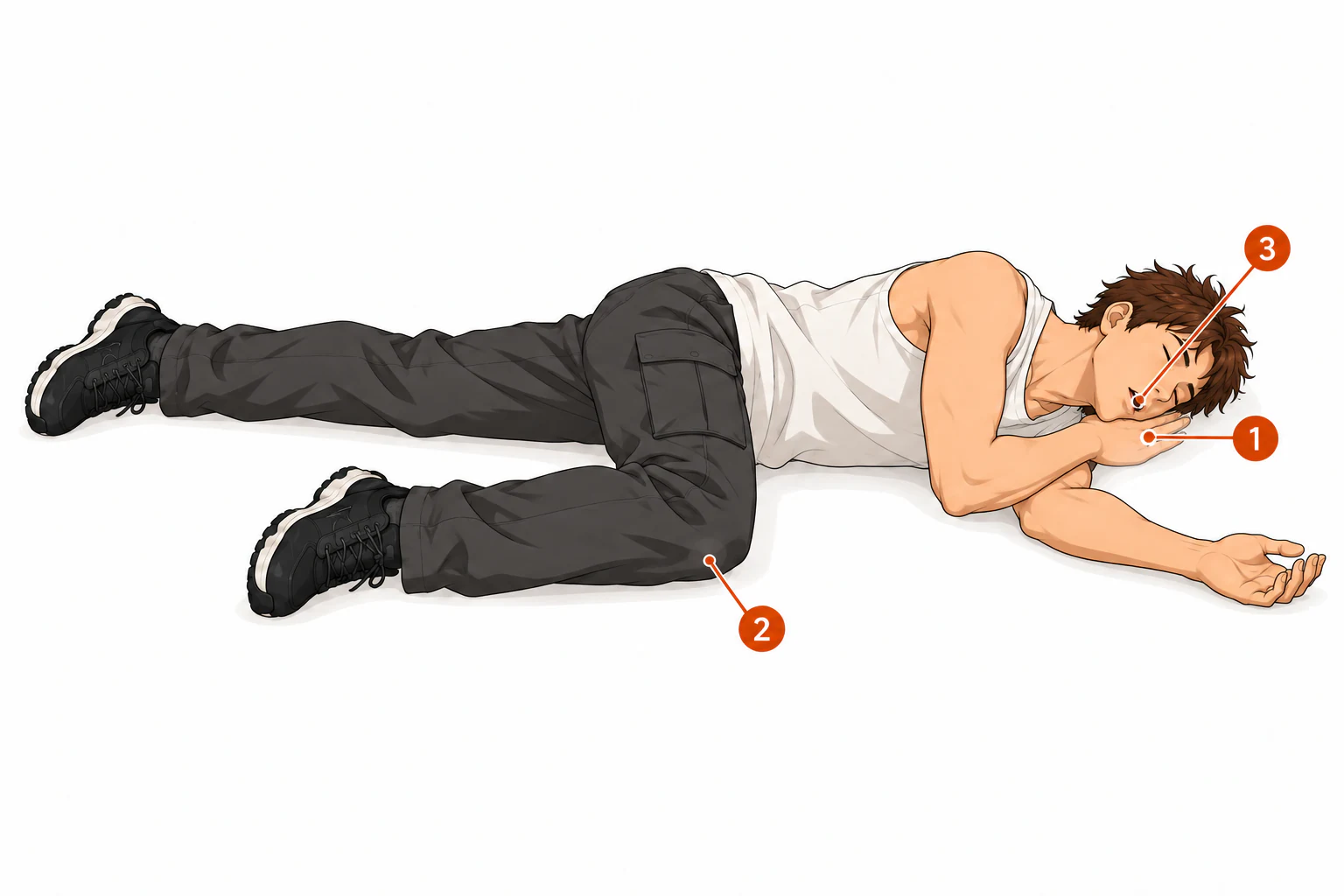
The goal: on their side, a hand under the cheek (1), the top knee bent at a right angle (2), and the head tilted back so the mouth points down and anything in it can drain (3). Four moves get them there.
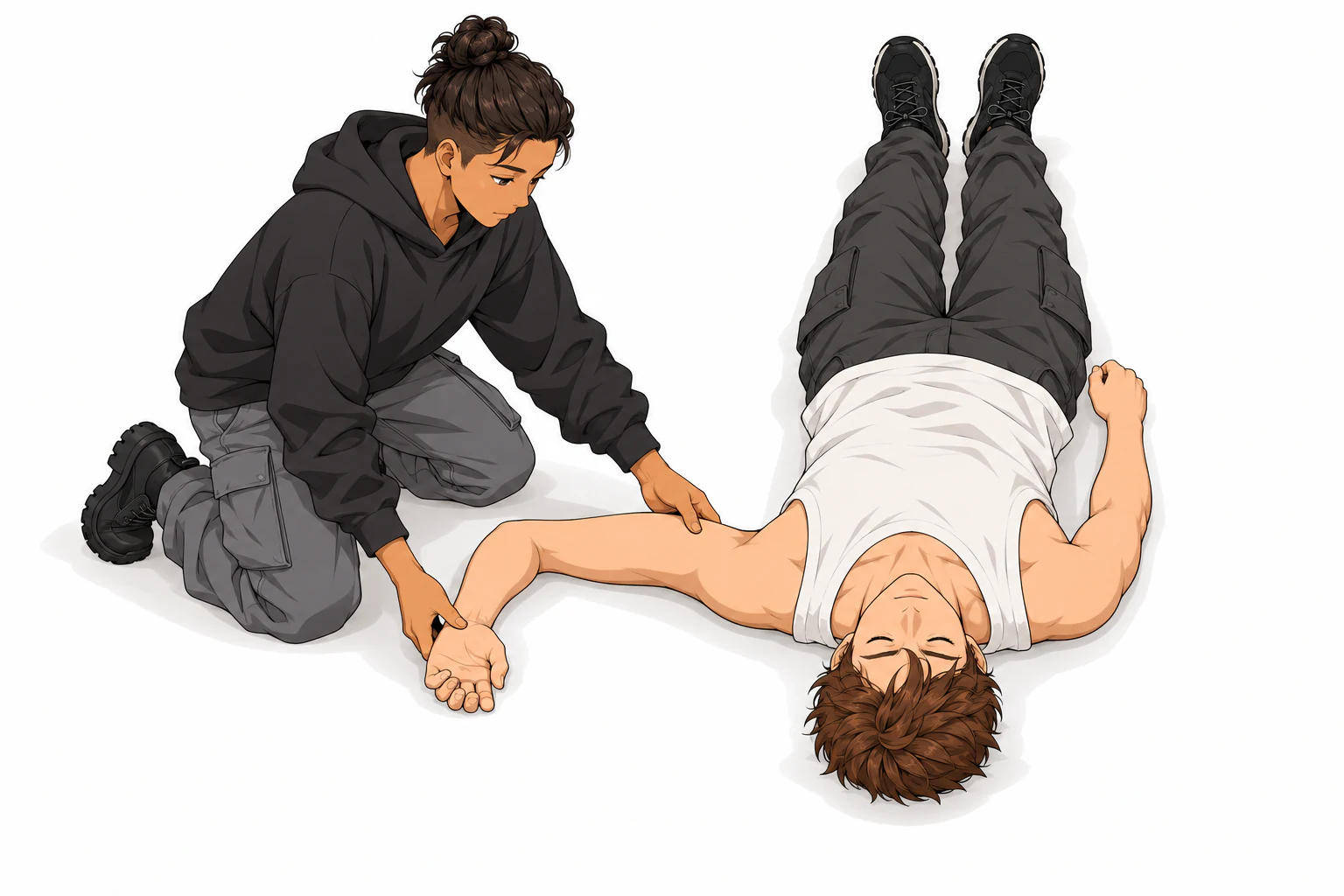
Straighten their legs. Put the arm nearest you out at a right angle, palm up.
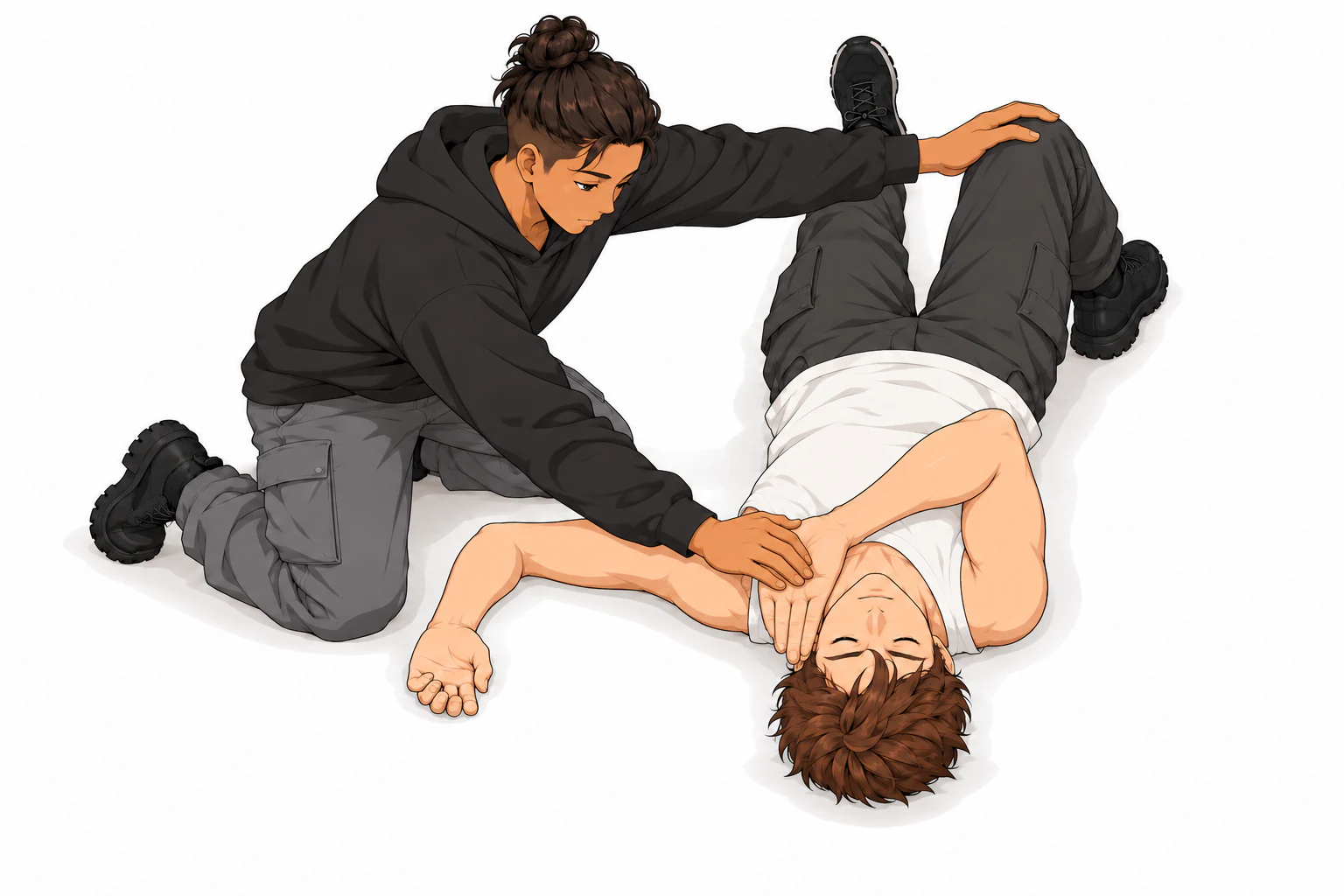
Bring the far arm across the chest and hold the back of the hand against their near cheek. With your other hand, pull the far knee up, foot on the ground.
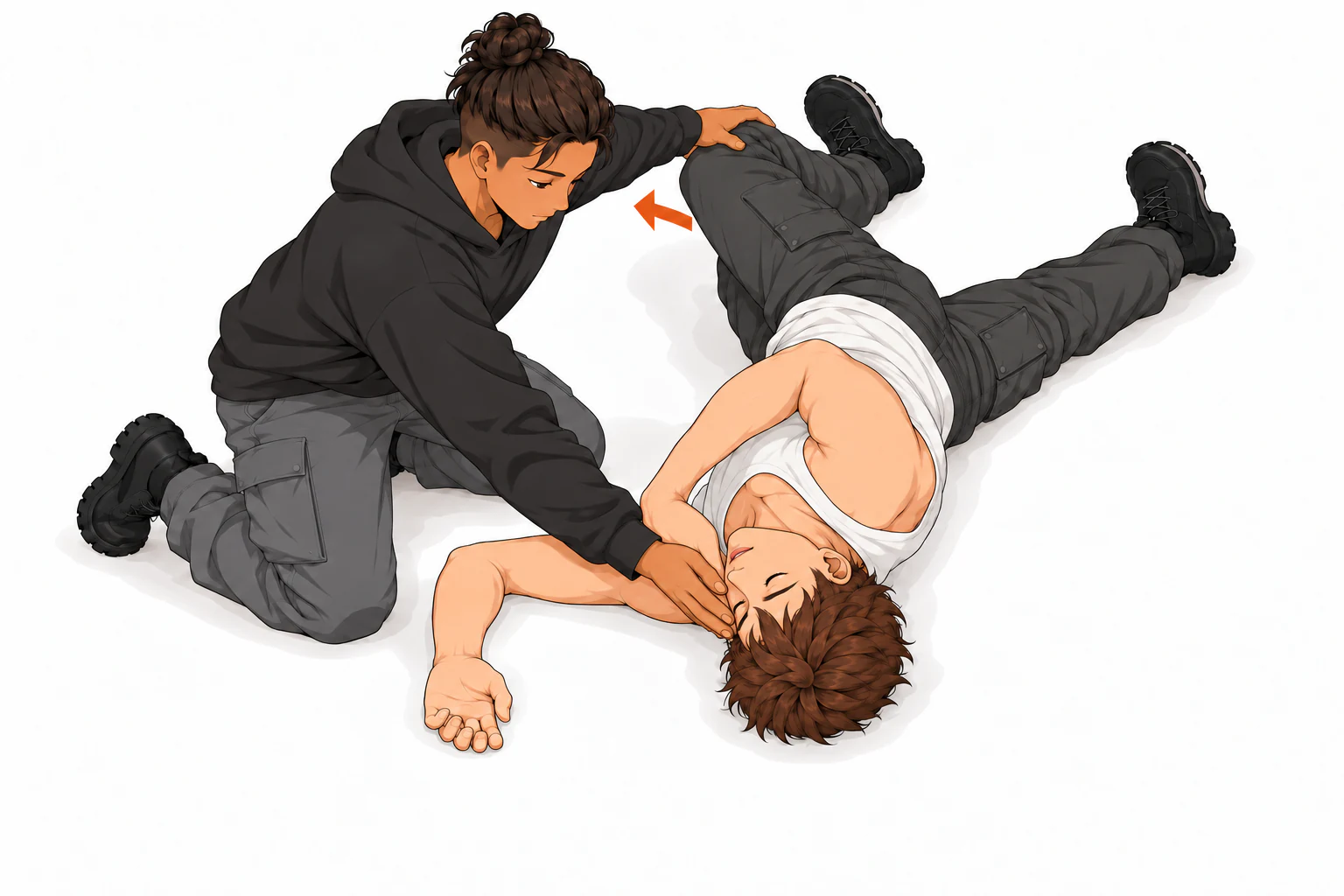
Keep the hand pressed to the cheek and pull the knee to roll them towards you, onto their side.
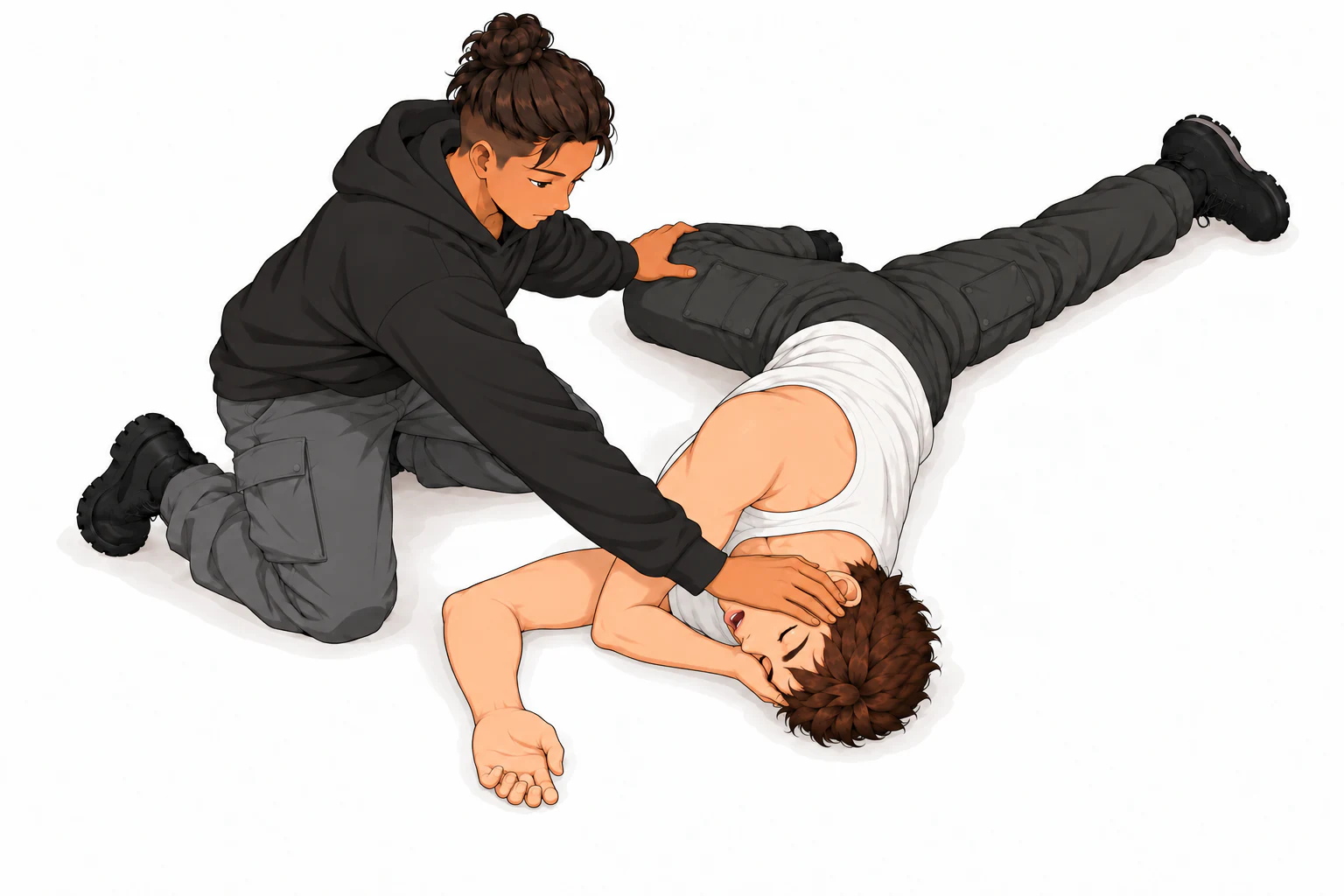
Bend the top leg so hip and knee are at right angles. Tilt the head back so the mouth points down.
Cover them and stay with them. Keep checking their breathing and talk to them: they may still hear you.
If their breathing becomes noisy, irregular or gasping, or stops, roll them onto their back and go to Unresponsive, not breathing.
Don't
- Don't turn someone onto their side if they are gasping. Keep them on their back.
- Don't try to make them vomit, and don't put your fingers in their mouth.
Why it happens
High doses of downers such as alcohol, GHB, opioids or benzos can sedate someone so deeply that they don't wake up. On their back, their tongue or vomit can block the airway; on their side, it drains.
On the phone and when help arrives
On the phone, describing what you see is enough. We advise against mentioning drugs.
On the phone, say what was taken if you know. In most circumstances they won't tell the police.
When help arrives, tell them what was taken, medicines included, and how much, and hand over anything left. It helps the treatment.
Doctors' confidentiality covers drugs too.
Emergency
- Unresponsive, not breathingOr only gasping or gurgling
- Opioid overdoseWon't wake, slow breathing, tiny pupils
- SeizureGoes stiff, jerks violently, doesn't respond
- Heat strokeVery hot, and confused or not responding
- Serotonin syndromeVery hot, shaking, twitching, confused
- ShockPale, cold sweat, racing heart, dizzy
- Bad tripPanic, fear, losing track of where they are
- PsychosisSuspicion, feeling followed, hallucinations